
| Slip Casting is the cornerstone Forming method in sanitaryware manufacturing. The integrity of the Slip directly influences the final product quality, the occurrence of Defects, and the stability of the entire Production cycle. Systematically evaluating the following properties provides a predictive understanding of the Slip's behavior within the Plaster Mold and its final transformation in the Kiln. | 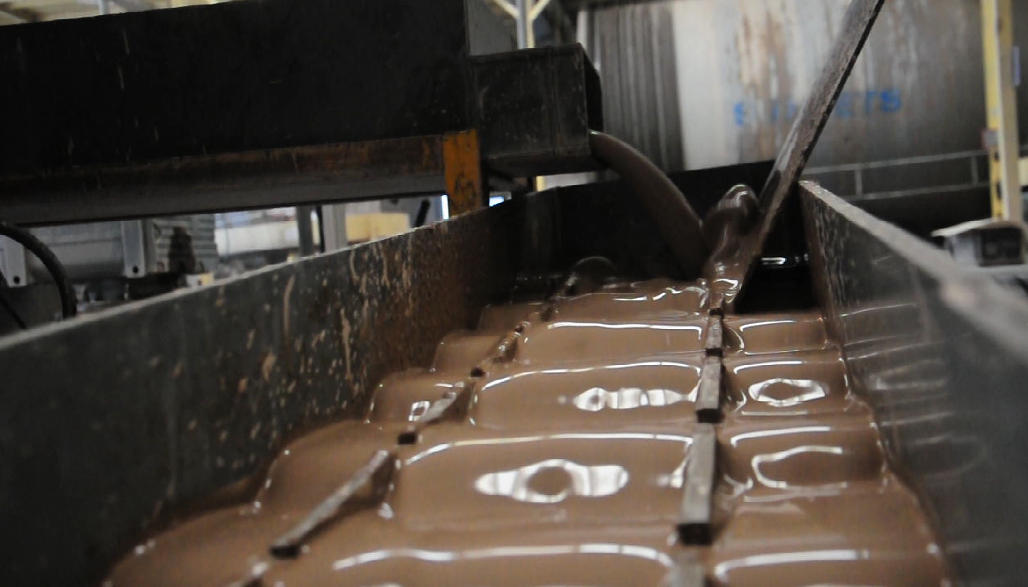 |
The ten key evaluation methods are reorganized below based on their relevance to the stages of the ceramic process:
I. Slip Rheological Properties Assessment
This test group focuses on the physical state of the Slip, which is vital for a controlled Casting Process.
Density (Specific Gravity):
Definition: The specific gravity of the Slurry.
Impact: Controls Cast Rate, Slip Unloading Behavior, and Drying Behavior.
Standard: Typically measured using a pycnometer or density cup. Sanitaryware Slip density generally ranges from 1.75 g/cc to 1.85 g/cc, adjusted according to the required product thickness and complexity.
Fluidity:
Definition: The measure of the Slip's flow behavior, reflecting its workability.
Measurement: Can be tested using a Torsion Viscometer (the first reading), a Ford Cup (Cup 4 or 5), or a Brookfield Viscometer.
Thixotropy:
Definition: The measure of Viscosity change over time, indicating the ability of the Slip to regain its structure when at rest.
Impact: Controls Slip Unloading Behavior and the quality of the subsequent Drying. Low Thixotropy is preferred for efficient Drying and smooth Unloading.
Measurement: Torsion and Brookfield viscometers offer the most accurate methods.
II. Slurry Quality and Forming Performance
These tests ensure the purity of the Slurry components and quantify the critical steps involved in Body Build-up within the mold.
Residue:
Definition: The content of oversized particles or impurities not adequately processed in the Slip.
Impact: Excessive residue leads to Defects such as Pinhole and reduces the Modulus of Rupture (MOR) of the Body.
Test: Sieving on different mesh sizes (e.g., 80# to 350#) to understand particle distribution.
Cast Rate:
Definition: The rate at which the Green Body wall thickness forms over a set time (e.g., 10, 30, or 60 minutes).
Test: Plaster Mold method (more closely mimics the shop environment) or the Baroid method (for laboratory control, eliminating variables like mold and ambient temperature).
Drying Behavior:
Definition: The characteristics and rate of Moisture Removal from the Green Body post-demolding.
Test: Primarily an Observation Test. After a set time (30 or 60 minutes) in the Plaster Mold, the stiffness of the cast piece is assessed via pressing.
III. Body Strength and Final Quality Inspection
This final group of tests evaluates the mechanical integrity, dimensional stability, and degree of Vitrification achieved after Firing.
Shrinkage:
Definition: The reduction in Body Size throughout the process (total shrinkage is typically around 12%).
Types: Green Shrinkage (due to Moisture Removal) and Fired Shrinkage (due to Vitrification and LOI).
Modulus of Rupture (MOR):
Definition: A measure of the Body's mechanical strength.
Types: Green MOR (strength after Drying) and Fired MOR (final strength after Firing).
Test: Casting standardized samples (round or square bars) and testing them under a three-point contact stress load.
Warpage (Deformation):
Definition: The dimensional Deformation that occurs in the Body during the Firing Process within the Kiln.
Impact: Low Warpage is essential for minimizing final product Defects related to shape.
Test: Measuring the deflection of a standard square bar placed on refractory supports before and after Firing.
Water Absorption:
Definition: Used to determine the final degree of Vitrification in the ceramic Body post-Firing.
Standard: Lower Water Absorption indicates superior Vitrification. A Properly Vitrified Body should exhibit less than 0.5% Water Absorption.