High-performance ceramic raw materials are becoming important functional materials in new-energy systems because they provide thermal stability, ionic conduction, electrical insulation and heat dissipation.
Alumina and boehmite are used in lithium-ion battery separator coatings; LLZO is being developed as an oxide solid electrolyte; yttria-stabilized zirconia (YSZ) is used in solid oxide cells; and AlN and Si₃N₄ serve demanding power-electronics applications.
What Problems Do Al₂O₃, LLZO and AlN Solve?
They are functional ceramic powders with tightly controlled purity, particle size, crystal phase, impurities and sintering behavior. Unlike conventional fillers, their material properties directly affect electrochemical performance, safety and device reliability.
Three Ceramic Applications in New Energy
Lithium Batteries: Ceramic-Coated Separators.
Al₂O₃ and boehmite particles can be coated onto polyolefin separators to improve thermal dimensional stability and electrolyte wettability. A 2024 study on boehmite-coated separators reported less than 15% shrinkage at 150°C for an advanced coated separator, compared with more than 80% for the uncoated PE separator under the study conditions. This shows why powder morphology, particle size and coating uniformity are becoming important ceramic-material parameters in battery manufacturing. | 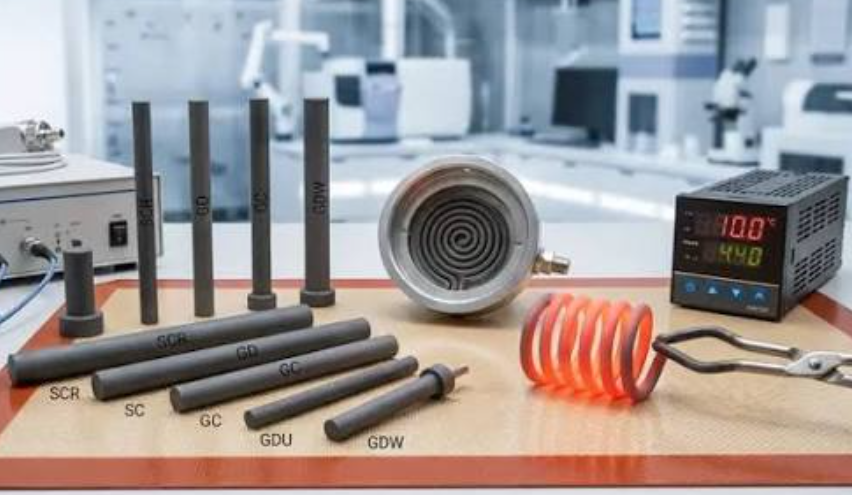 |
Lithium lanthanum zirconate, or LLZO, is a lithium-ion-conducting ceramic considered for oxide solid-state batteries.
The U.S. ARPA-E has supported the transition of LLZO ceramic electrolyte technology toward manufacturable EV batteries. The ceramic electrolyte contains no flammable liquid electrolyte, making safety one of its major development drivers.
In hydrogen and distributed-energy systems, YSZ is a well-established solid electrolyte for solid oxide fuel cells. Current U.S. Department of Energy information lists YSZ-based SOFCs with operating temperatures of roughly 500–1,000°C.
EV Power Electronics: Insulation and Thermal Management.
Electric-vehicle inverters require ceramic substrates that electrically isolate semiconductor devices while transferring heat efficiently. Aluminum nitride is widely studied for this combination of insulation and thermal performance. NREL power-electronics research also evaluates ceramic substrate reliability under mechanical shock and thermal cycling. Silicon nitride offers an additional advantage where high mechanical strength and thermal-cycle durability are required. For SiC power modules, nitride-based AlN and Si₃N₄ substrates remain important candidates for increasingly power-dense packaging. | 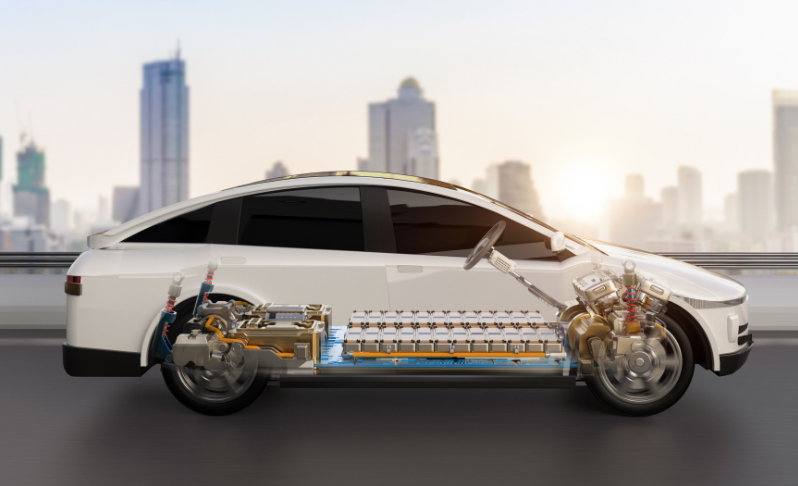 |
Key Raw-Material Control Points
Item | Requirement from the Source Draft |
Separator powders | particle size, morphology, purity and dispersion |
Solid electrolytes | crystal phase, ionic conductivity and sintered density |
YSZ | stabilizer content and high-temperature conductivity |
AlN/Si₃N₄ | thermal performance, insulation and mechanical reliability. |
Conclusion
The role of ceramics in new energy is shifting from passive heat-resistant materials to functional materials responsible for safety, ion transport, insulation and thermal management.
Future ceramic raw-material competitiveness will therefore depend not only on purity, but also on precise control of particle size, phase composition, interfaces and batch consistency.
FAQ
Q1: Which ceramic raw materials are commonly used in new-energy applications?
A: Important examples include alumina, boehmite, LLZO, YSZ, aluminum nitride and silicon nitride.
Q2: Why are ceramic powders used in lithium-ion battery separators?
A: Ceramic coatings can improve thermal stability and reduce separator shrinkage at elevated temperatures.
Q3: Is maximum purity the only requirement for energy ceramics?
A: No. Particle size, crystal phase, dispersion, sintering behavior and batch consistency are equally important.