
Additives in medical ceramics perform three main functions: improving processing, controlling microstructure and stabilizing functional ceramic phases. Dispersants and binders support alumina and zirconia forming, pore-forming agents create controlled porosity in hydroxyapatite scaffolds, and yttria stabilizes zirconia used in demanding medical applications.
How Do Dispersants, Pore Formers and Y-TZP Stabilizers Work?
Medical ceramic additives include temporary processing aids and permanent functional dopants. Their role must be evaluated not only during forming but also after debinding, sintering and final material characterization.
Dispersants and Binders Improve Forming.
Slurry-based ceramic manufacturing requires high solids loading while maintaining manageable viscosity and good particle dispersion. A 2024 review of additives in ceramic 3D printing highlights the importance of dispersants, surfactants and coupling agents in controlling rheology, stability and printability. Binders provide sufficient green strength for handling, but excessive organic content increases the burden on debinding. In medical ceramics, incomplete removal is particularly undesirable because final composition and cleanliness must remain tightly controlled. | 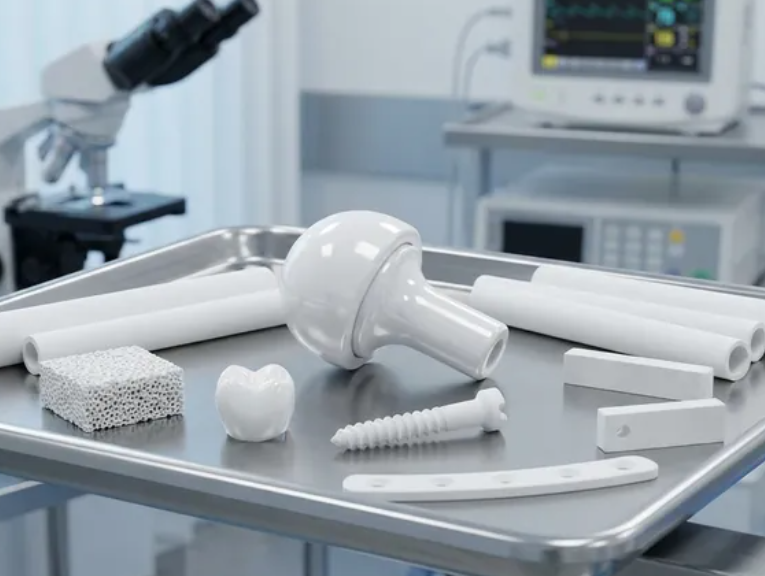 |
Hydroxyapatite and other calcium-phosphate ceramics are frequently manufactured with controlled porosity. Organic pore formers such as starch can burn out during firing and leave an interconnected porous structure. A review of starch/hydroxyapatite scaffolds reports that starch additions can generate highly porous structures, while also demonstrating the important trade-off between increasing porosity and maintaining compressive strength. The target is therefore not maximum porosity, but a pore structure matched to the intended component and mechanical requirement. | 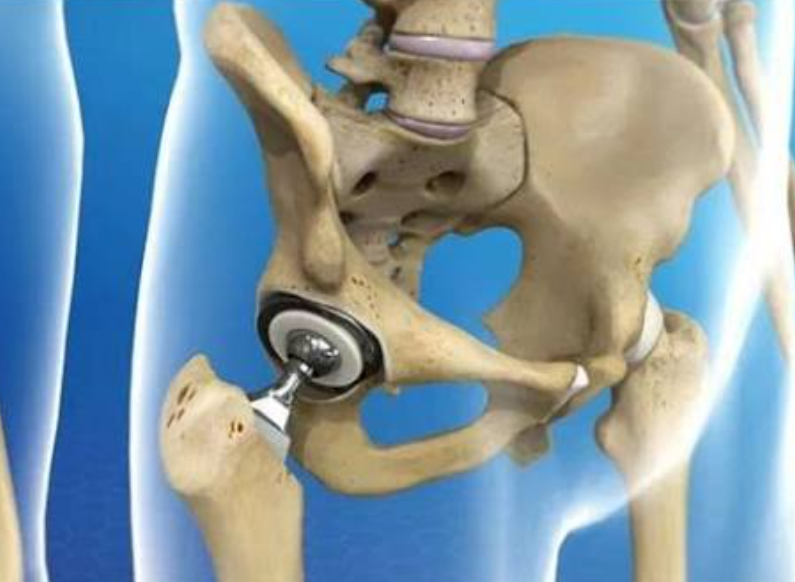 |
Yttria is fundamentally different from a temporary binder or dispersant. It remains within the ceramic and stabilizes the tetragonal zirconia structure.
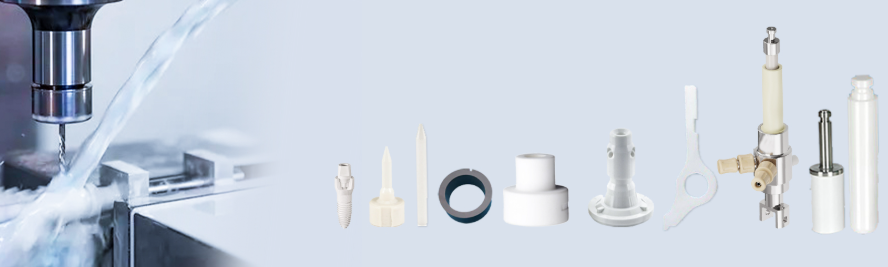
ISO 13356:2015 specifies requirements and test methods for yttria-stabilized tetragonal zirconia polycrystal, or Y-TZP, used as a material for surgical implants.
This illustrates why functional additives in medical ceramics must be treated as part of the material design rather than simply as processing chemicals.
 |
Control Points in ISO 13356 and ISO 13779
Item | Requirement from the Source Draft |
1 | Control additive purity and unwanted residues |
2 | Validate complete removal of temporary organic additives |
3 | Evaluate porosity together with mechanical strength |
4 | Verify zirconia phase composition after sintering |
For hydroxyapatite, monitor chemistry and crystallinity using methods such as those specified in ISO 13779-3 | 2018 |
Hydroxyapatite powder raw materials can also be evaluated against ISO 13779-6 | 2015. |
Conclusion
The purpose of additives in medical ceramics is to control processing, microstructure and functional phase stability with high precision. A suitable additive system must therefore be evaluated through the complete manufacturing route—from slurry preparation and forming to debinding, sintering and final material testing.
FAQ
Q1: Should medical ceramics use as little additive as possible?
A: The goal is the lowest effective amount that delivers stable processing and required final properties.
Q2: Does higher scaffold porosity always improve performance?
A: No. Increasing porosity generally reduces mechanical strength, so both must be optimized together.
Q3: Why is yttria added to zirconia?
A: It stabilizes the zirconia crystal structure required for Y-TZP materials.