
The practical answer is application-specific: 99.5% alumina primarily supports dense, hermetic and joinable parts; some 99.7% grades use controlled porosity for optical performance; and 99.8% alumina places greater emphasis on trace impurities, particles and plasma-facing surfaces. These grades are not a simple replacement sequence. Define the component function first, then select purity and microstructure.
Why Does 99.5% Alumina Emphasize Density and Hermeticity?
The 99.5% class is appropriate when density, hermeticity and joining are central requirements. It supports vacuum insulators, laser and X-ray equipment, sensors and analytical components. Molybdenum-manganese metallization also requires suitable grain-boundary chemistry, roughness and dimensional stability. Adhesion and hermeticity must be checked after thermal cycling, while medical use requires separate biocompatibility validation.
Why Can 99.7% High-Purity Alumina Retain Porosity?
The 99.7% class can deliberately retain porosity for optical performance. In laser reflector chambers, controlled pores create internal scattering paths that redistribute incident light. The engineering target is therefore pore fraction, size distribution, connectivity, surface condition and thermal stability rather than maximum density. Random large pores may be defects, while a designed pore structure performs a function. | 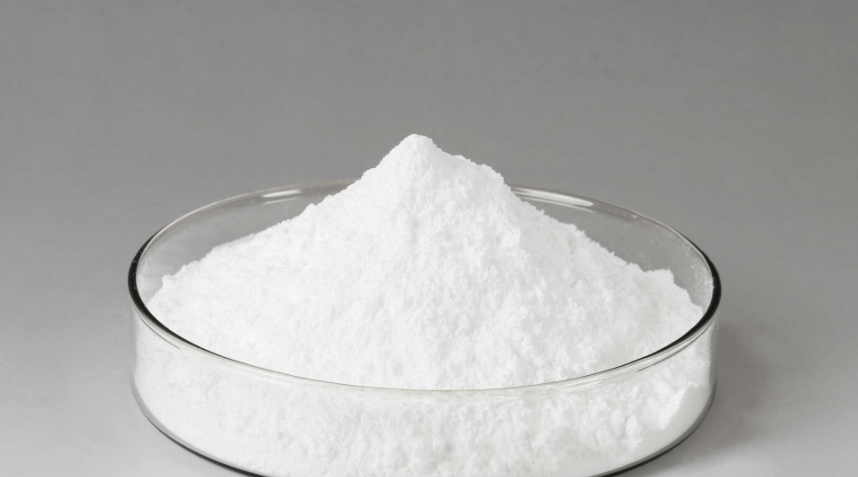 |
Where Does 99.8% Alumina Add Value in Semiconductor Equipment?
The 99.8% class is most relevant when low contamination and plasma-facing surface stability are priorities. Tighter control of sodium, silica and grain-boundary glass supports fine polishing and reduced particle release. Applications include insulating blocks, nozzles, shields and chamber parts for etching, PVD, CVD and ion implantation. Qualification must still reproduce the actual gas chemistry, bias and temperature because purity alone does not specify plasma resistance.
How Do the Three High-Purity Classes Differ?
Purity class | Structural and process emphasis | Typical application direction |
99.5% | High density, hermeticity, polishability or metallization | Vacuum insulation, laser and X-ray parts, sensors and analytical instruments |
99.7% | Dense or deliberately porous structure selected by function | Laser reflector chambers and specialized optical parts |
99.8% | Low sodium and silica, fine grains, low porosity and particle control | Semiconductor etch, deposition, ion implantation and high-vacuum parts |
This comparison describes application logic rather than a universal supplier-independent classification. Materials with the same purity can differ in sintering additives, grain size, pore population and finishing route, producing significantly different service behavior.
What Must Be Controlled from Powder to Sintering?
Review Al₂O₃, trace Na₂O and SiO₂, particle-size distribution, agglomeration and batch consistency. Forming and sintering control must address density gradients, binder residues, abnormal grains and closed pores. Finishing should match the function: controlled roughness for metallization or stable polished surfaces for low-particle hardware. NIST summaries likewise define high-purity alumina together with relative density and grain size.
Conclusion
Select backward from the function: density and hermeticity for vacuum joining, designed porosity for optical reflection, and trace-impurity plus surface control for semiconductor environments.
FAQ
Question | Short answer |
Is 99.8% alumina always better than 99.5%? | No. A purpose-designed 99.5% grade may be better for metallization, hermetic joining or conventional insulation. |
Does porosity make 99.7% alumina defective? | Not necessarily. Uniform controlled pores can provide optical scattering; random large pores may be defects. |
Is purity enough for semiconductor components? | No. Check sodium and silica, grains, pores, polishing quality and particle release after representative plasma exposure. |