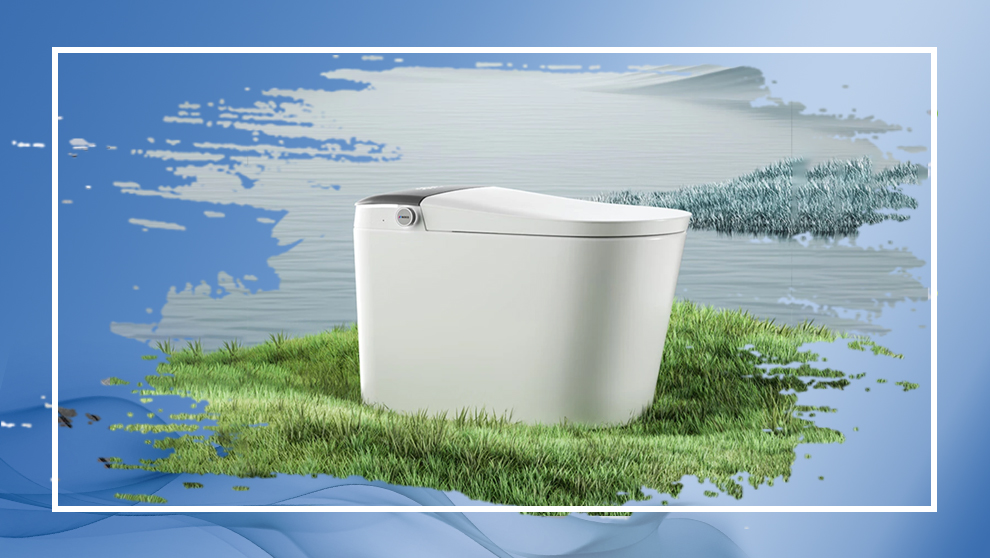
To meet the demand for premium finishes like Rose Gold or Matte Black, PVD technology is migrating from faucets to ceramic surfaces.PVD is a molecular-level bonding process conducted in a vacuum. It creates an ultra-thin (1-5 microns) yet incredibly hard film. PVD-treated surfaces are 2 to 3 times more scratch-resistant than standard coatings. The dense layer blocks moisture penetration, ensuring color stability and corrosion resistance even in harsh coastal environments .
Technological Pivot: Hyper-dispersants utilizing Steric Hindrance mechanisms allow slurries to maintain stable low viscosity even at ultra-high solid loadings of 70 vol%.Smart Integration: Real-time feedback from in-line viscometers allows AI-driven mixing systems to dynamically adjust additive dosages. This ensures that Battery Casting Machines operate within a temporal tolerance of ±1%, regardless of raw material fluctuations.
Utilizing regional geological resources, such as Clay Schists, as sustainable alternatives to rare feldspar reduces transportation-related carbon footprints by 15-20%.Process Adaptation: Sunlets’ high-pressure technology utilizes AI-driven formulation compensation to adjust for the mineralogical variability of local clays, ensuring that high-end sanitaryware maintains structural integrity and ±0.3% dimensional tolerance.
Rheological Superiority: Modified powders allow for a 30% reduction in viscosity without decreasing solid content. This maximizes the output of Battery Casting Machines.Precision and Predictability: Enhanced particle packing efficiency reduces internal stress during drying and firing. According to , uniform surface modification can hold firing shrinkage tolerance within 0.2%, essential for large-format, ultra-thin ceramic slabs.
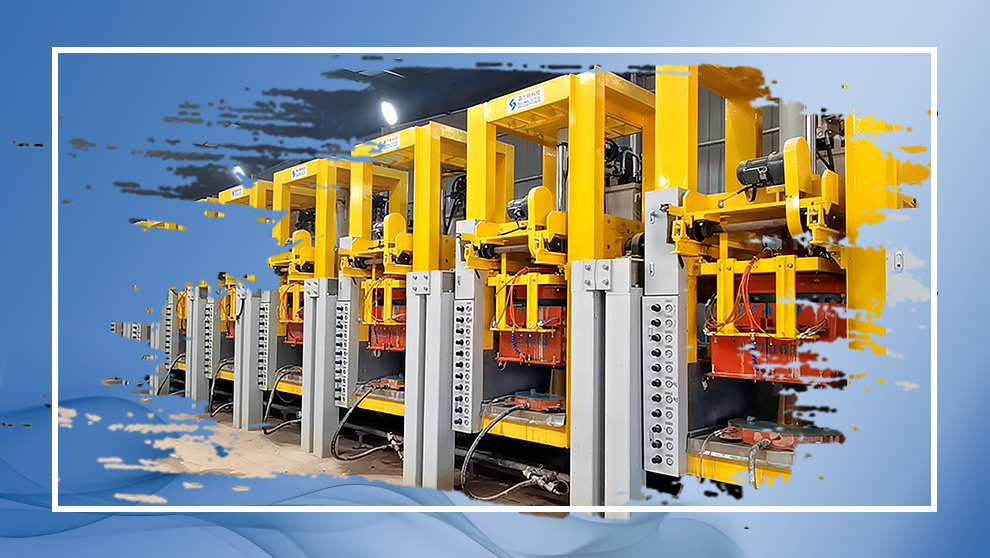
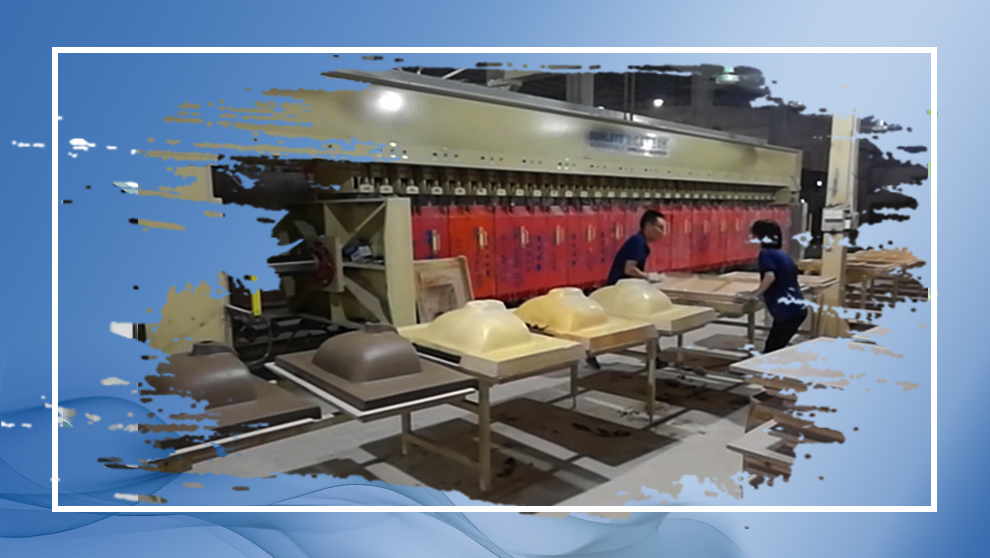
The production of lightweight ceramics demands higher precision in forming, particularly regarding wall-thickness uniformity.Lightweight additives often lead to segregation. Sunlets utilizes a proprietary Composite Deflocculation system to ensure a homogenous distribution of these components even under 1.2 MPa of pressure.Using our High Pressure Casting Machines, we apply digital pressure compensation to manage the uneven drying shrinkage typical of lightweight green bodies. Testing shows that gradient pressurization can boost the yield rate of lightweight products to over 95%.
Particle shape dictates the viscosity of the Casting Slip and the packing density of the green body.Highly spherical powders produced via Spray Pyrolysis or Sol-Gel processes are becoming the industry standard.Spherical particles provide the lowest surface-area-to-volume ratio, allowing slurries to maintain low viscosity even at 70%+ solid loading. This reduces Deflocculant consumption and maximizes casting efficiency in high-pressure environments.
Introducing nano-TiO2 into the glaze creates a surface that generates oxidative hydroxyl radicals under UV light.Value Proposition: This empowers the ceramic surface with potent Antimicrobial properties and the ability to decompose organic stains, a must-have for high-end smart toilets.Superhydrophobicity & Micro-Nano Smoothness:Nano-particles create a "Lotus Effect" microstructure. Unlike temporary chemical coatings, nanotechnology forms a permanent physical smoothness during the Firing process. Testing shows contact angles exceeding 100°, drastically reducing the risk of stain adhesion.
High-purity tailings enriched in lithium and potassium can replace scarce natural feldspar, reducing raw material procurement costs by approximately 12% while maintaining identical thermal expansion coefficients.Digital Formulation Compensation: To manage the inherent variability of alternative materials, Sunlets utilizes digital platform that dynamically adjusts the Deflocculant dosage, ensuring consistent yield rates regardless of raw material shifts.
Harnessing Steric Hindrance for High-Solids LoadsWhen solid loading reaches its threshold, electrostatic repulsion alone cannot prevent particle collisions.Technical Data: Sunlets’ R&D demonstrates that utilizing modified sodium polyacrylate creates a physical barrier (the "Molecular Brush" effect). This mechanism allows a 2% increase in solid loading while simultaneously reducing apparent viscosity by 15% compared to traditional inorganic electrolytes.
Enhanced Cake Permeability: They prevent the "over-densification" of the filter cake, maintaining microscopic drainage channels.Mold Protection: Traditional salts cause "salting-out," the primary enemy of resin molds. New-generation inorganic agents utilize low-sodium technologies, which internal data shows reduce micropore clogging by over 20% compared to traditional silicates.
Organic polymers adsorb onto clay surfaces, acting like microscopic brushes that prevent re-agglomeration even under intense 1.5 MPa pressure. This creates a more permeable Filter Cake, allowing water to escape efficiently and shortening the cycle time.
Modern organic decoagulants form micro-nano-scale polymer bridges between particles during the drying process.The drying breakage rate can be controlled within 1% by adjusting the molecular amount distribution of the condensate with precision.
Modern organic decoagulants (such as sodium polyacrylate) not only play a dispersing role,The long-chain molecules can also play a certain bridging effect between the particles to improve the flexural strength of the green body.For complex types such as intelligent toilets, the use of the decoagulation system recommended by Senlant can reduce the breakage rate of green blanks by more than 5%.
We have found through long-term observation that,If the dispersant molecular weight is not properly selected, excessively long polymer chains can block the micropores of the mold (about 10-20 μm).In the high-end OEM production line, we recommend the use of medium molecular weight polyacrylic acid dispersant. This can not only ensure the stability of the slurry, but also ensure that the drainage rate of the mold is not damaged,So as to extend the service life of the mold by more than 20%.
Never put solid decoagulant directly. An aqueous solution with a specific concentration (usually 10%-20%) must be prepared in advance and added precisely by a metering pump to avoid "burning" due to excessive local charge density of the slurry ".
Polymeric organic decoagulants such as sodium polyacrylate are the first choice for modern high-end molding processes.Synergistic mechanism: In addition to electrostatic repulsion, its long-chain molecules attach to the surface of the particles to form a barrier layer, resulting in a steric effect.Stability advantage: This "dual stabilization" mechanism makes the slurry much less sensitive to temperature and shear forces. Even under the condition of high solid content,Also can maintain excellent thixotropy.
The decoagulant makes the pore distribution inside the unfired body highly uniform by optimizing the arrangement of particles. This homogeneity is critical in the firing phase to ensure a smooth discharge of chemically bound water,Effectively avoid Glaze defects caused by uneven local shrinkage.
The decoagulant makes the pore distribution inside the unfired body highly uniform by optimizing the arrangement of particles. This homogeneity is critical in the firing phase to ensure a smooth discharge of chemically bound water,Effectively avoid Glaze defects caused by uneven local shrinkage.
Achieves significant plasticizing effects at lower dosages, reducing production costs. Effectively reduces friction between particles, improving the workability and flexibility of the body. Effectively disperses particles, prevents agglomeration, and improves the uniformity and stability of the body.
Particles with the same charge have repulsive force, preventing aggregation.Particles have attractive force, promoting aggregation.Hydrated ions form an adsorbed layer on the particle surface, increasing the bonding force between particles.